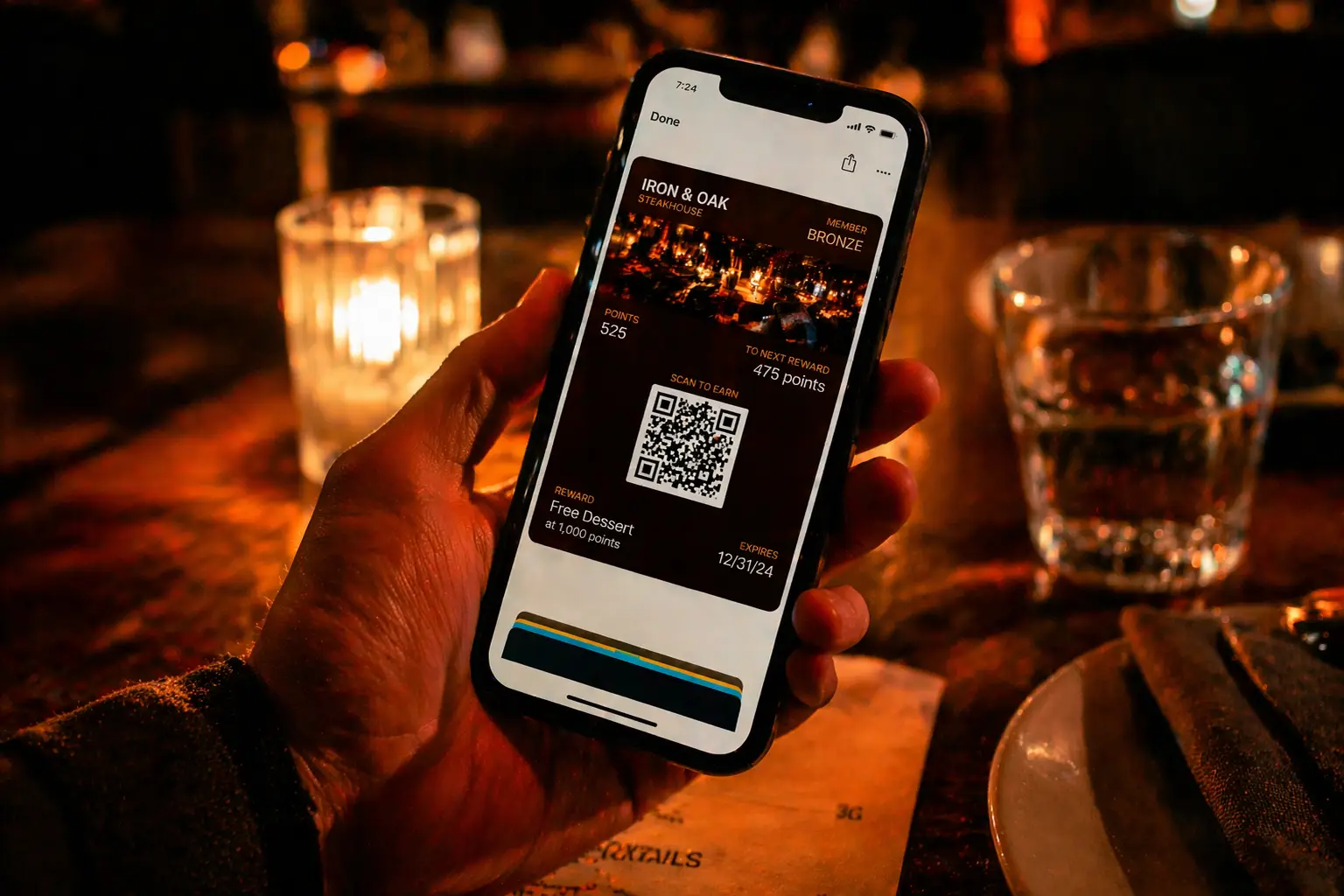
There's a marketing channel with engagement rates between 20% and 40%. It lives on a device your customers carry everywhere. It surfaces your brand at the exact moment they're making a purchasing decision. It supports real-time updates, location-based triggers, and personalized offers without requiring an app download.
Almost nobody in the SMB space is using it.
Wallet passes (the digital cards that live in Apple Wallet and Google Wallet) have been technically available for years. The infrastructure is mature. The user behavior is established. Hundreds of millions of people use their phone's wallet app regularly, whether for boarding passes, concert tickets, or payment cards.
But as a marketing and retention channel for small and mid-size businesses? It's wide open. And the businesses that figure this out now will have a meaningful head start before the rest of the market catches on.
In brief: Wallet passes (digital cards in Apple Wallet and Google Wallet) deliver 20–40% engagement rates versus 1–3% for email. They require no app download, update in real time, and persist on the customer's phone for months. For SMBs, they're the highest-ROI marketing channel almost nobody is using yet.
A wallet pass is a digital card stored in Apple Wallet or Google Wallet that functions as a loyalty card, coupon, membership credential, or branded touchpoint. Unlike apps, wallet passes require no download. Unlike email, they persist on the customer's device and update in real time. Unlike SMS, they surface at the moment of purchase intent, not as an interruption.
Wallet Pass Engagement Rates vs. Email and SMS
Marketing conversations in the SMB world tend to orbit the same channels: email, SMS, social media, paid search, maybe direct mail for the traditionalists. These are known quantities. Marketers understand the mechanics, the costs, the expected returns.
Wallet passes don't fit neatly into that conversation. They're not quite email. They're not quite SMS. They're not a traditional loyalty card. They're something new: a persistent, updatable, branded presence on the most personal device your customer owns.
Here's what makes them different.
Email sits in an inbox competing with hundreds of other messages. The average open rate for restaurant marketing emails hovers around 20%, and click-through rates sit in the low single digits. Your message is one of dozens that day. It's easy to ignore, easy to delete, easy to never see.
SMS is more immediate but increasingly fatigued. Open rates are still high (around 98%), but that's partly because people check texts reflexively, not because they want to read marketing messages. Unsubscribe rates are climbing. Regulations are tightening. The channel works but it's getting noisier.
Wallet passes operate in a fundamentally different context. They're not messages competing for attention in a feed. They're persistent cards sitting in an app the customer opens with intent, usually when they're about to make a purchase, check a balance, or redeem something. The engagement is high because the timing is right. The customer isn't being interrupted. They're choosing to look.
That context difference explains the engagement rates. When someone interacts with a wallet pass, they're typically in a purchasing mindset. They're checking their loyalty balance before deciding where to get coffee. They're looking at an offer before choosing a lunch spot. They're verifying a reward before walking into a store. The interaction is tied to intent, not interruption.
What a Wallet Pass Actually Does
A wallet pass is a digital card that lives in a customer's Apple Wallet or Google Wallet. It can represent a loyalty card, a coupon, a membership, an event ticket, or a general-purpose branded card. It appears alongside their credit cards, boarding passes, and transit cards: prime real estate on their phone.
But the real power is in what happens after the initial save.
Wallet passes are updatable. You can push changes to the pass in real time without the customer doing anything. Their loyalty balance updates automatically after a purchase. An expired offer gets replaced with a fresh one. A seasonal promotion appears on the pass the morning it launches. The customer opens their wallet and sees current, relevant information every time.
Wallet passes support push notifications. When you update a pass, the customer gets a notification on their lock screen. This is different from a text message or email. It's a notification from their wallet, which carries a different psychological weight. It feels like an update to something they own, not a message from a brand trying to sell them something.
Wallet passes are location-aware. You can configure a pass to surface a notification when the customer is near your location. They walk past your coffee shop and their phone gently reminds them they have a reward waiting. This isn't intrusive push marketing. It's contextual, relevant, and tied to proximity.
And wallet passes require zero app infrastructure. You don't need to build an app. You don't need customers to download anything. The wallet app is already on their phone. They save the pass and they're in your ecosystem. The barrier to entry, for you and for them, is essentially zero.
Wallet Passes vs. Email vs. SMS vs. Loyalty Apps
| Channel | Engagement Rate | Retention | Setup Complexity | Requires Download | Real-Time Updates | |---------|----------------|-----------|-----------------|-------------------|-------------------| | Wallet Passes | 20–40% | 6–12 months | Low (minutes) | No | Yes | | Email | 1–3% CTR | 70–75% annual | Low | No | No | | SMS | 10–15% CTR (declining) | Variable | Medium | No | No | | Loyalty Apps | 5–10% | 3–6 months | High (months) | Yes | Yes |
The numbers tell the story: wallet passes combine the persistence of apps with the frictionlessness of email, and outperform both on engagement.
Wallet Pass Marketing Data: Engagement, Retention, and Redemption
Engagement rates for wallet passes consistently land between 20% and 40%, depending on the industry and the quality of the pass program. Compare that to email click-through rates of 1–3% and even SMS engagement rates that are declining as the channel gets more crowded.
Retention rates are even more compelling. Customers who save a wallet pass retain it for an average of six to twelve months. Compare that to email lists where churn rates of 25–30% annually are normal. A wallet pass doesn't get buried in a folder or filtered into promotions. It sits in the wallet until the customer actively removes it.
Redemption rates for wallet pass offers consistently outperform email and SMS coupon redemption by a factor of three to five. When an offer lives on a persistent card that the customer sees every time they open their wallet, the likelihood they'll use it increases dramatically.
These numbers make sense when you think about the context. An email offer requires the customer to remember it, find it, open it, and act on it. A wallet pass offer is already in their hand. The friction between seeing the offer and using it is nearly zero.
Why SMBs Should Care Right Now
Large brands have been using wallet passes for years. Starbucks built much of its mobile loyalty dominance on wallet pass integration. Airlines use them for boarding passes. Retailers use them for membership cards. The infrastructure is proven at massive scale.
But in the SMB space (coffee shops, restaurants, fitness studios, salons, boutique retail), wallet pass adoption is still vanishingly low. Most small business owners don't know the channel exists as a marketing tool. The ones who do often assume it requires a custom app or significant technical investment.
It doesn't. Modern platforms let you create a branded wallet pass from a description of your business. You describe what you want (a loyalty card with a punch system, a coupon for first-time visitors, a membership card with tier-based rewards) and the system generates a pass that's ready to distribute. No code. No designer. No app developer.
The distribution is equally simple. A QR code at the register. A link in an email. A button on your website. A text message with a save link. Customers tap once and the pass is in their wallet. Enrollment friction is as close to zero as marketing gets.
This means the competitive window is real. If you're a coffee shop running a wallet pass loyalty program and none of your local competitors are, every customer who saves your pass is carrying your brand in their pocket. When they're deciding where to get coffee tomorrow morning, your pass, with their loyalty balance, their available reward, maybe a fresh offer, is right there in their wallet. Your competitors are hoping those same customers remember an email they sent three days ago.
The Compounding Effect
Wallet passes compound in ways other channels don't.
Every pass saved is a persistent connection. Unlike an email that gets one shot at engagement, a wallet pass stays relevant for months. Every update you push (a new offer, a balance change, a seasonal promotion) reactivates that connection without requiring the customer to do anything.
The data compounds too. Every interaction with the pass (every redemption, every notification tap, every location trigger) builds your understanding of that customer's behavior. Over time, you learn which offers drive visits, which rewards motivate spending, which customers are at risk of lapsing, and which are your most valuable regulars.
This data feeds back into your marketing decisions. You stop guessing what your customers want and start knowing. You stop running the same promotion for everyone and start personalizing based on actual behavior. The pass becomes both the channel and the intelligence layer.
Wallet passes are the retention layer that completes the loyalty loop. For the full picture on how AI-powered loyalty programs work (and why most SMBs never launch one), see The 5-Minute Loyalty Program.
Getting Started This Week
If you're an SMB owner who hasn't explored wallet passes, the path to getting started is shorter than you think. You can have a branded wallet pass live and distributable in a single afternoon. The technology is ready. The customer behavior is established. The engagement rates are proven.
The question isn't whether wallet passes work. It's whether you want to occupy that space on your customer's phone before your competitors figure out that they should.
Six months from now, wallet passes will be a standard part of the SMB marketing playbook. The businesses that start now will have six months of data, six months of customer relationships, and six months of optimization that latecomers will spend a year catching up to.
Start with one pass. A simple loyalty card. Distribute it to your next hundred customers. Watch what happens. Watch the redemption rates. Watch the repeat visits. Watch the customer who saved your pass three months ago walk back through your door because their phone reminded them they had a reward waiting.
That's the moment the channel proves itself. And it's a customer coming back.
Frequently Asked Questions
What is a wallet pass? A wallet pass is a digital card stored in Apple Wallet or Google Wallet that functions as a loyalty card, coupon, membership credential, or branded touchpoint. Unlike apps, wallet passes require no download. They persist on the customer's device, update in real time, and surface at the moment of purchase intent.
How do Apple Wallet passes work for businesses? Businesses create a branded pass (loyalty card, coupon, or membership) through a wallet pass platform. Customers save it with a single tap via QR code, link, or text. Once saved, the business can push real-time updates (balance changes, new offers, seasonal promotions) directly to the pass. Location-based triggers can surface the pass when the customer is nearby.
Are wallet passes better than loyalty apps? For most SMBs, yes. Loyalty apps require customers to download, create accounts, and remember to open the app. Wallet passes require a single tap to save and then live alongside payment cards the customer already uses daily. Engagement rates for wallet passes (20–40%) consistently outperform app engagement, and the barrier to entry, for both the business and the customer, is essentially zero.
Auric is mobile marketing and loyalty from Alive Labs. Branded Apple Wallet and Google Wallet passes created in 30 seconds with AI Pass Builder. SMS campaigns. Multi-location management. No code. No developer. Live in under 5 minutes. Get Early Access →