You already know your food cost to the decimal. You know what Friday night looks like when you're 20 covers short. What most independent operators don't know is what the burger place two blocks over charged for their combo last Tuesday, or when the new fast-casual down the street quietly dropped their lunch price by two dollars to steal your midday traffic.
That gap is expensive. According to PageCrawl.io, a restaurant that raises prices without knowing what competitors charge can lose lunch traffic for a month before anyone on the floor notices the pattern. The good news is that tracking competitor pricing is no longer a job that requires a dedicated analyst. Here are the five ways operators actually do it in 2026, what each one costs you in real time, and where each one breaks down.
In brief: Independent restaurant operators track competitor pricing through five main methods: manual visits, delivery-app spot checks, mystery-shopper services, spreadsheet tracking, and dedicated competitive intelligence tools. Each method trades off time, accuracy, and coverage differently. Manual and spreadsheet approaches are free but slow and incomplete; delivery-app checks are fast but only capture off-premise menus; mystery-shopper and dedicated tools offer broader coverage at higher cost or setup effort. The right method depends on how many competitors you're watching and how often pricing in your market moves.
Competitive intelligence for restaurants is the ongoing process of collecting, organizing, and acting on data about what nearby competitors charge, what they promote, and how their menus change over time.
1. Manual visits and menu pickups
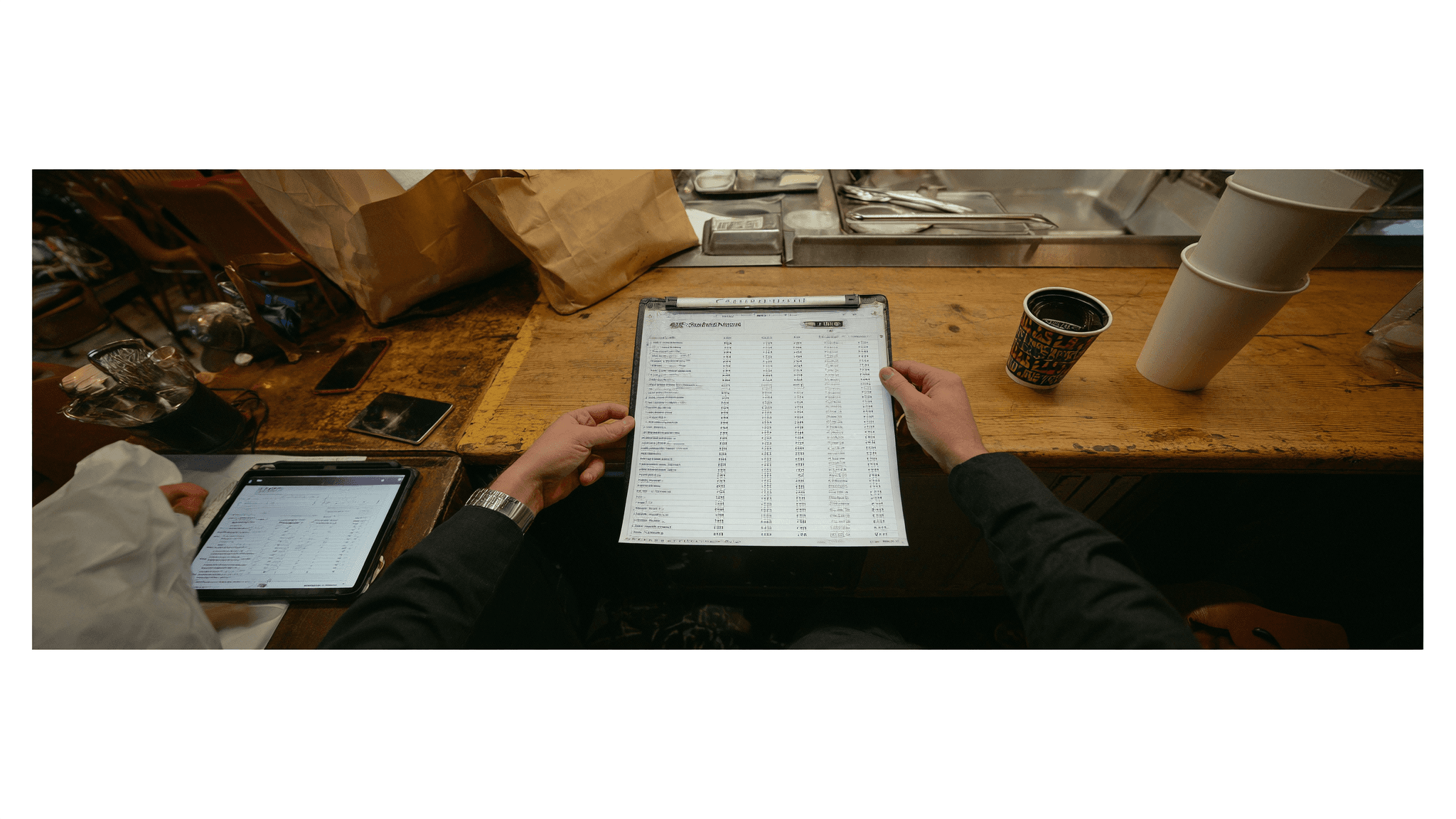
You walk in, grab a menu, take a photo, and write down the prices. This is still the most common method for independent operators, and it has one genuine advantage: you see the full experience. You notice the portion size, the table presentation, the upsell the server runs.
The problem is the time math. If you have five direct competitors and you visit each one once a month, you're spending two to four hours on collection alone, before you do anything with the data. And the moment you walk out, the information starts aging. A competitor can update their POS and reprint menus the next day. You won't know until your next visit.
Manual visits work well as a supplement. They're poor as a primary system.
2. Delivery-app spot checks
DoorDash, Uber Eats, and Grubhub publish competitor menus publicly. You can open the app right now and see what the Thai place nearby charges for pad see ew. This is fast, free, and surprisingly underused.
The blind spot is significant: delivery menus are not dine-in menus. Many restaurants mark up delivery prices to offset platform fees, so what you see in the app may not reflect what a guest pays at the table. You're also only seeing competitors who are active on those platforms, which in some markets excludes a meaningful slice of your real competition.
Clymin runs a managed service that automates exactly this kind of delivery-platform monitoring across DoorDash, Uber Eats, Grubhub, and regional platforms, which tells you something about how much demand exists for doing this at scale. For a single operator doing spot checks manually, it's a useful free tool. For building a real system, the coverage gaps add up.
3. Mystery-shopper services
Mystery-shopper firms send real people to competitor locations on a schedule, collect menu data, and report back. Some services have expanded to include menu photography, price verification, and promotional tracking.
The data quality is high. A human in the room catches things a scraper misses: the verbal special, the price on the chalkboard that never made it to the printed menu, the combo that's technically not on the menu but the server always offers.
The cost is the constraint. Enterprise chains use these services because the per-location fee amortizes across hundreds of units. For an independent operator watching five competitors, the monthly cost often doesn't pencil out. Frequency is also limited; most services run visits monthly or quarterly, which means you're still working with data that's weeks old.
4. Spreadsheet tracking with scheduled reminders
This is the DIY version of a competitive intelligence system. You build a spreadsheet with your key competitors, their core menu items, and current prices. You set a calendar reminder to update it every two weeks. You assign it to a manager or do it yourself.
It sounds simple because it is. The discipline problem is real: according to NGAZE.AI, most restaurant operators make marketing decisions based on instinct because getting real intelligence on what competitors are doing, pricing, and promoting takes hours of manual research that never happens. The spreadsheet gets updated twice, then it sits.
Where spreadsheets do work is as the output layer for other methods. If you're pulling data from delivery apps or manual visits, a structured spreadsheet gives you a place to spot trends over time. The pattern of a competitor raising prices three times in six months is only visible if you've been recording each change.
5. Dedicated competitive intelligence tools
This is the newest category and the fastest-growing one. Tools in this space monitor competitor menus automatically, flag price changes, and surface patterns across your local market without requiring you to do the collection work yourself.
The core value is frequency and coverage. A tool checking competitor menus daily catches a price change the same week it happens. Webtingle makes the point well: when one competitor adds a non-alcoholic pairing menu, it's noise. When four competitors do it over two months, it's a signal your beverage program is leaving margin on the table. That pattern is invisible if you're checking manually once a month.
Ticket, Alive Labs' restaurant competitive intelligence tool (currently in early access), is built specifically for this use case: monitoring competitor menu pricing and surfacing changes for independent and multi-location operators. Tools like this are the right fit when you're watching more than three or four competitors, when your market moves fast, or when you simply can't afford to have a manager spend two hours a month on collection that still ends up incomplete.
The tradeoff is setup and cost. You need to define your competitor set, connect your data sources, and trust the system enough to act on what it surfaces. For operators who've never had a competitive pricing process at all, the learning curve is real, though short.
Which method fits your operation
Here's the honest breakdown by situation:
- Manual visits: Best as a supplement for qualitative context. Poor as a standalone system for pricing data.
- Delivery-app spot checks: Fast and free for off-premise pricing. Unreliable for dine-in price comparison.
- Mystery-shopper services: High data quality, low frequency, high cost. Better fit for chains than independents.
- Spreadsheet tracking: Works if someone actually maintains it. Usually doesn't survive contact with a busy service week.
- Dedicated tools: Best coverage and frequency. Requires setup and budget. Worth it when you're watching more than a handful of competitors or when your market is actively moving.
Frequently asked questions
How often should a restaurant check competitor prices?
Weekly is the practical target for most independent operators. Monthly is the minimum if your market is stable. If you're in a high-competition urban market or a delivery-heavy segment, prices can shift faster than that. Daily automated monitoring is the only way to catch same-week changes without spending staff time on collection.
Do delivery app prices reflect what competitors charge in the restaurant?
Not reliably. Many restaurants add a delivery markup to offset platform fees, so delivery-app prices often run higher than dine-in prices. Use delivery-app data to understand off-premise competitive positioning, but verify separately if you're trying to compare dine-in menu pricing.
What's the cheapest way to track competitor menu prices?
Delivery-app spot checks cost nothing and take 15 minutes. Pair them with a simple spreadsheet and a recurring calendar reminder, and you have a functional (if manual) system for free. The cost is staff time, which is real even if it doesn't show up as a line item.
How many competitors should I be tracking?
For most independent operators, three to seven direct competitors is the right scope. Direct means same cuisine type, similar price point, within a reasonable delivery or walk radius. Tracking more than that dilutes your attention without adding proportional signal.
What's the difference between menu monitoring and competitive intelligence?
Menu monitoring is the data collection layer: tracking what competitors charge and when prices change. Competitive intelligence is the broader practice of turning that data into decisions, including spotting trends across multiple competitors, timing your own price moves, and identifying gaps in your menu or beverage program. Monitoring is an input; intelligence is the output.